


Only decision remains on ICTR archives transfer, Rwanda tells UN
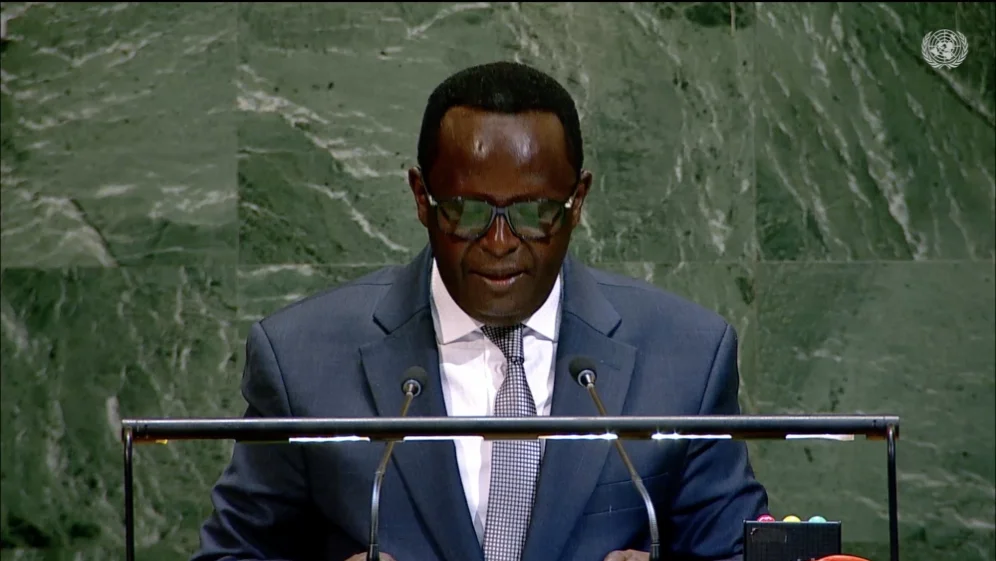
Rwanda has told the United Nations that it is ready to finance the transfer and long-term management of the International Criminal Tribunal for Rwanda (ICTR) archives, saying the remaining questions of capacity, feasibility and financing have been addressed.
Ambassador Martin Ngoga, Rwanda’s Permanent Representative to the UN, made the appeal during a UN General Assembly debate on the report of the International Residual Mechanism for Criminal Tribunals on Wednesday, October 21, urging member states to support relocating the records to Rwanda as the mechanism prepares for closure.
“We believe the essential questions of capacity, feasibility and financing have been addressed. What remains is a decision,” Ngoga told the General Assembly.
The latest appeal comes amid ongoing negotiations at the UN Security Council over a resolution that will determine the mechanism’s future, including how its remaining responsibilities will be handled.
Rwanda has for years sought to have the archives transferred from Arusha, Tanzania, where they are held under the custody of the residual mechanism. The records include survivors’ testimonies, evidence presented during trials and judicial decisions relating to the 1994 Genocide against the Tutsi.
Ngoga said the decision on the archives should be guided by their historical significance and the interests of survivors rather than administrative convenience.
“Their permanent location should therefore be determined not by administrative convenience, but by historical relevance, accessibility and proximity to the people whose lives and history they record,” he said.
Rwanda maintains that it can host the archives while preserving the UN’s legal authority over them. Ngoga said the country had invested in archival infrastructure, developed preservation and digitisation expertise, and established legal and security safeguards.
“We fully recognize that these archives are, and must remain, United Nations property,” he said.
“Our request is to host them under arrangements preserving United Nations legal authority, professional archival standards, confidentiality, witness protection and appropriate international access.”
He added that Rwanda was prepared to cover the costs of transferring, preserving, digitising and managing the archives, avoiding additional financial burdens on UN member states.
Rwanda wants survivors’ views considered
Ngoga said bringing the archives to Rwanda would mean more than moving documents from one location to another, arguing that the records should be accessible to the communities whose experiences they preserve.
“For survivors and their families, bringing the archives to Rwanda would mean more than transferring documents,” he said.
“It would bring an essential part of their history closer to the communities whose testimony and suffering are recorded within them, and to the memorials where we honour those who perished.”
He urged the Security Council to consider the views of Rwanda and survivors as it negotiates the mechanism’s future, noting that countries directly affected by its decisions may not be represented among Council members.
“The countries most directly concerned may not be represented in the Security Council when these decisions are taken. But their absence from the Council’s membership must never mean the absence of their voices from its decisions,” Ngoga said.
He added: “The Council must listen to the countries concerned, particularly the victims, survivors and communities whose history and future will be affected by its decisions.”
The ambassador said the future of the archives was inseparable from the pursuit of justice for victims of the genocide and efforts to preserve the truth for future generations.
“The decisions being considered are therefore not simply administrative or budgetary. They concern the responsibilities that will remain when the institution has completed its work,” he said.
Rwanda argues that the archives are central to remembrance, education, ongoing prosecutions and the prevention of future atrocities. Ngoga also warned that genocide denial and distortion continue to harm survivors and undermine reconciliation.
He called for the judicial record to remain accessible for legitimate judicial, educational and research purposes, with appropriate safeguards.
More than 1,000 suspects still at large
Alongside the archives issue, Rwanda called for continued international cooperation to ensure that people suspected of participating in the Genocide against the Tutsi are brought to justice.
Ngoga said more than 1,000 individuals suspected of involvement in the genocide remain at large, more than three decades after the crimes were committed.
“For survivors whose families have waited more than three decades, the passage of time is not an answer,” he said.
“Witnesses are ageing, evidence is becoming harder to secure, and some survivors are dying without seeing justice done.”
Rwanda urged countries with outstanding indictments and extradition requests to act and cooperate with its judicial authorities. Ngoga acknowledged countries that have extradited suspects or prosecuted them domestically.
He said the mechanism’s closure should not weaken the capacity of national jurisdictions to investigate and prosecute genocide-related crimes.
“As the Mechanism prepares for closure, arrangements must preserve assistance to national jurisdictions, including the expertise and resources necessary to sustain investigations and prosecutions,” he said.
“The closure of an institution must never become an opportunity for fugitives to escape accountability.”
The ICTR was established by the UN Security Council in November 1994 to prosecute those responsible for genocide and other serious violations of international humanitarian law committed in Rwanda in 1994. It closed in December 2015, with its remaining functions transferred to the residual mechanism, which also handles outstanding matters from the tribunal for the former Yugoslavia.
Ngoga said the closure process should be guided by legal, political and financial responsibilities, including the protection of witnesses, preservation of judicial records and prudent management of resources invested by member states.
Rwanda offers to receive convicted persons
Rwanda also reiterated its readiness to receive convicted persons to serve the remainder of their sentences, subject to applicable legal frameworks and international safeguards.
Ngoga said the country was prepared to ensure humane detention conditions, in independent monitoring and respect for the rights of convicted persons.
“This offer, together with our proposal to host the archives, reflects our willingness to assume practical responsibilities as the Mechanism completes its work,” he said.
He added that the mechanism was never intended to exist indefinitely and that Rwanda supported an orderly transition of its remaining functions, with clear responsibilities and timelines.
The ambassador urged the Security Council and the General Assembly to give due weight to the views of survivors and Rwanda as decisions on the institution’s future are made.
“Rwanda sincerely hopes that the Security Council and the General Assembly will listen to the wishes of survivors and give due weight to the views of the country whose history these archives preserve,” he said.
He concluded that the institution’s closure should uphold the same principles of justice that guided its establishment.
“The Tribunal was established to serve justice. Its closure should serve that same purpose,” Ngoga said.
By Prince Ruzigana




Comments (0)
No comments yet. Be the first to comment!
Leave a Comment