


Nduhungirehe questions Ekenge’s return as FARDC spokesperson
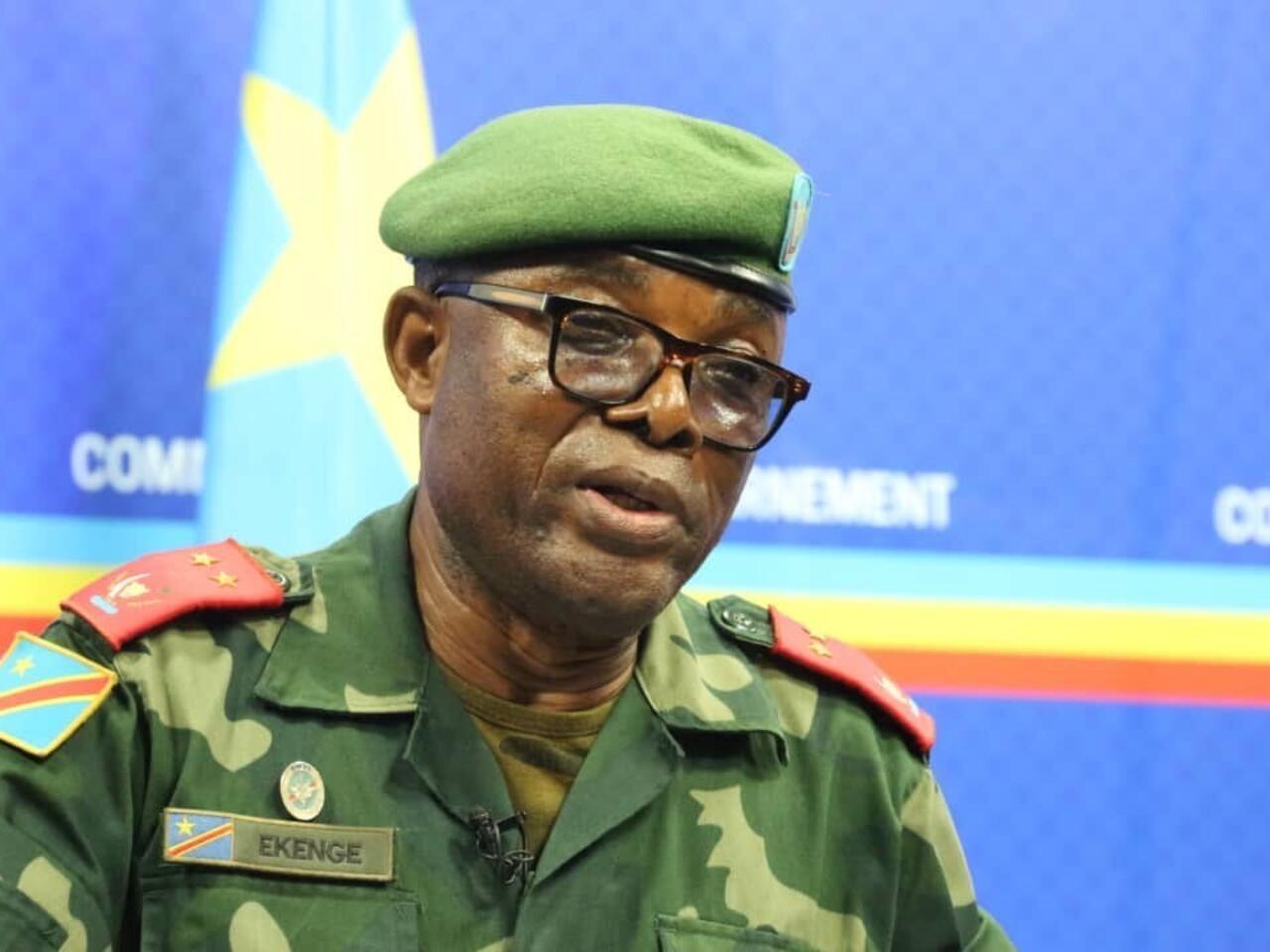
Foreign Affairs Minister Olivier Nduhungirehe has questioned the return of Major General Sylvain Ekenge as spokesperson of the Armed Forces of the Democratic Republic of Congo (FARDC), months after he was suspended over remarks targeting Tutsi women.
Ekenge’s return became publicly apparent through a FARDC statement issued on September 25 following an aircraft crash in Kenge, Kwango Province, which killed senior military officers. The statement was signed by Ekenge, who was identified as the spokesperson of the Congolese army.
In a post on X on Sunday, September 27, Nduhungirehe described Ekenge’s return as “troubling and indecent”, questioning why the officer had resumed the same position without a public explanation about the lifting of his suspension or any further accountability over his December 2025 remarks.
Ekenge was suspended on December 29, 2025, following comments he made two days earlier during an appearance on the Congolese state broadcaster RTNC. The FARDC said at the time that his remarks were discriminatory towards members of the Tutsi community and did not reflect the position of the army, government or presidency.
During the December 27 broadcast, Ekenge warned Congolese men about marrying Tutsi women and alleged that some families were using marriage and childbirth as a means of preserving what he described as their “supremacy.”
The remarks drew condemnation and prompted the army to suspend him from his position as spokesperson. The suspension was also reported by international media at the time.
Nine months later, his signature on the September 25 FARDC statement indicated that he had returned to the role.
Nduhungirehe argued that the development should be viewed in the broader context of hate speech targeting Congolese Tutsi.
“This is a confirmation, if any were still needed, that the hate speech against Congolese Tutsi and the ideology of genocide in the DRC are not the work of black sheep in the army or renegades in the government, but rather a political project fully embraced by the State,” he wrote.
The minister also questioned the manner in which Ekenge’s return became public, saying it emerged indirectly through a military statement about the aircraft crash rather than through a separate announcement on his reinstatement.
“This is information that was made public almost on the sly, through a statement from Sylvain Ekenge announcing a tragic event,” Nduhungirehe said, arguing that the timing was intended to limit criticism of the decision.
His comments referred back to Ekenge’s December remarks, including his warning that Congolese men should “be careful” when marrying Tutsi women.
Ekenge had also alleged that Tutsi women could bring Tutsi men into their marital homes under the guise of being relatives, allowing them to father children and preserve their “race.”
The remarks were among the reasons cited by the FARDC when announcing his suspension in December. The army said the statements were incompatible with its values and constitutional responsibilities.
Nduhungirehe further linked Ekenge’s remarks to the “Ten Hutu Commandments”, a text published in Rwanda in 1990 by Hassan Ngeze, who was later convicted by the International Criminal Tribunal for Rwanda for genocide and other crimes.
By Prince Ruzigana


Comments (0)
No comments yet. Be the first to comment!
Leave a Comment