


Research key to reducing Africa’s reliance on imported health technologies – geneticist
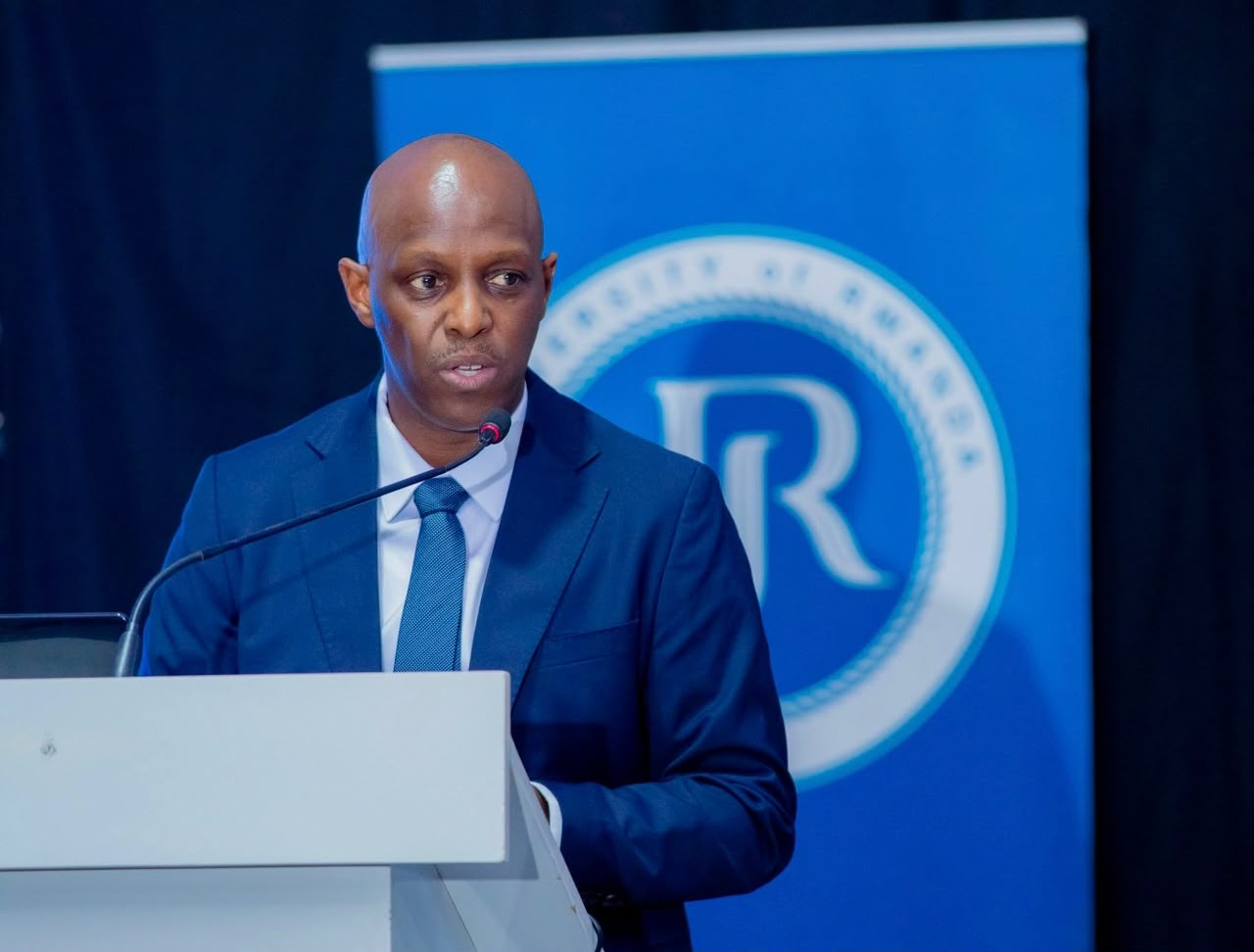
Research and investment in local scientific capacity are key to reducing Africa’s reliance on imported health technologies, Dr Leon Mutesa, a professor of human genetics at the University of Rwanda, has said.
Mutesa said African countries need to strengthen their research institutions, train more scientists and invest in laboratory infrastructure to develop solutions to local health challenges and respond more effectively to disease outbreaks.
He was speaking during the fourth African Research Universities Alliance (ARUA) Annual Distinguished Public Lecture at the University of Rwanda, on October 16, where he shared Rwanda’s experience in developing scientific capacity and applying local research to public health emergencies.
His presentation focused on how innovation and capacity building in bio-manufacturing could help address gaps in African health systems, particularly the continent’s dependence on imported diagnostic technologies, medicines and vaccines.
The COVID-19 pandemic exposed the risks associated with this dependence, as countries faced pressure to secure essential testing supplies and other medical products during a global health emergency.
Mutesa said Rwanda’s experience demonstrated the importance of investing in local scientific expertise and research infrastructure that can be mobilised when new health threats emerge.
Local research helped expand COVID-19 testing
Mutesa cited Rwanda’s response to the COVID-19 pandemic as an example of how scientific innovation can help countries manage shortages of essential medical supplies.
He said Rwanda initially had only 2,500 testing kits available for a population of approximately 14 million people, creating a challenge for authorities seeking to expand testing while limiting the spread of the virus.
At the time, a polymerase chain reaction (PCR) test cost about $50, according to Mutesa.
His research team developed a pooled-testing approach, which involved combining samples from several people and testing them together.
When a pool tested negative, individual testing was unnecessary. If it tested positive, further tests were conducted to identify infected individuals.
The method allowed laboratories to test more people using fewer kits, particularly when the proportion of positive cases was low.
Mutesa said the approach helped Rwanda increase its testing capacity from about 150 tests a day to as many as 10,000.
The method was also adopted by other African countries, including South Africa, Ghana and Tanzania, he said.
Rwanda subsequently established testing facilities at Kigali International Airport to screen travellers as international flights resumed and new variants emerged.
For Mutesa, the experience demonstrated how local research could help countries make better use of limited resources rather than depend entirely on imported supplies.
Rwanda also explored the use of trained scent-detection dogs to identify COVID-19 infections, working with international researchers and the Rwanda National Police.
The initiative followed research suggesting that dogs could distinguish samples associated with COVID-19 infections through their sense of smell.
Mutesa said selected dogs were trained to detect samples collected from individuals and deployed at Kigali International Airport.
He cited findings from the research programme indicating that the dogs achieved an accuracy of approximately 94%, comparable to the 92% to 96% range he presented for PCR testing.
According to Mutesa, screening with the dogs took about six minutes, compared with approximately 12 to 15 minutes for a rapid diagnostic test.
The programme provided an additional method of screening during the pandemic and illustrated how research partnerships could help Rwanda explore alternative approaches to public health challenges.
The dogs were later reassigned to other detection duties as the COVID-19 emergency subsided.
Rwanda’s response to the 2024 Marburg virus outbreak further demonstrated the importance of local scientific expertise, Mutesa said.
He explained that researchers used genomic sequencing to investigate the virus, identify its genetic characteristics and trace its relationship with previously documented strains.
The work brought together researchers from the University of Rwanda, the Rwanda Biomedical Centre, the Ministry of Health and international research institutions.
Mutesa said genomic analysis helped investigators trace the outbreak to a mining site near Kigali, where Egyptian fruit bats were investigated as a possible source of exposure.
Rwanda recorded 66 Marburg cases and 15 deaths during the outbreak, according to figures he presented.
The response combined laboratory investigations with contact tracing, patient isolation, clinical management and other public health measures.
Mutesa also highlighted Rwanda’s participation in a Marburg vaccine candidate trial, which enrolled approximately 1,700 participants and was completed within three months, according to his presentation.
He said the experience showed how research infrastructure and trained personnel developed through previous investments could be mobilised quickly when a new disease threat emerged.
Such capacity is particularly important in Africa, where countries continue to face outbreaks of diseases including Ebola, Marburg, Mpox and Rift Valley fever.
Beyond responding to outbreaks, Mutesa said Africa needs sustained investment in scientific training to develop technologies and strengthen its ability to address health challenges.
He drew on his own experience establishing a specialised human genetics research programme in Rwanda.
After completing his medical degree in Rwanda, he pursued doctoral and postdoctoral training at the University of Liège in Belgium before returning to develop the field locally.
In 2006, he established the Rwanda Reference Center for Human Genetics, a specialised facility he described as the only one of its kind in East Africa.
Mutesa said developing the discipline was challenging because Rwanda was still rebuilding after the 1994 Genocide against the Tutsi, while the health sector faced urgent priorities including HIV, malaria and tuberculosis.
To secure resources for research and training, he began applying for international grants.
Over approximately 15 years, he submitted around 160 grant proposals, of which 34 were successful, according to figures presented during the lecture.
He said the funding helped establish laboratory infrastructure, acquire scientific equipment, support research and train postgraduate students.
The programme contributed to the training of more than 140 master’s and PhD students, while the research group produced at least 275 scientific publications, according to his presentation.
Mutesa said some of the researchers trained through the programme had taken up positions at the University of Rwanda and other institutions, including leadership roles.
He urged young researchers to persevere despite the difficulties involved in securing funding and building scientific careers.
“Don’t give up. Never give up, because it pays back,” he said.
The University of Rwanda introduced master’s and PhD programmes in biotechnology in 2023 to address gaps in specialised scientific skills, Mutesa said.
The programmes cover areas relevant to health, diagnostics, therapeutics, biopharmaceuticals, agriculture, environmental science and industrial biotechnology.
He said biotechnology and bioinformatics skills are increasingly important for African countries seeking to strengthen disease surveillance, develop diagnostic tools and build the scientific capacity needed for local production of health technologies.
The university is also working with national and international institutions to strengthen research and training.
Vice-Chancellor Professor Kayihura Muganga said the University of Rwanda had signed more than 190 partnerships with foreign universities and research institutions over the previous two years.
Muganga said the African Research Universities Alliance, which brings together 23 universities across 13 African countries, provides a platform for institutions to pool resources, strengthen research capacity and improve the global competitiveness of African scholarship.
He said Rwanda’s experience rebuilding its institutions and developing human capital after the 1994 Genocide against the Tutsi offered lessons for other African countries.
For Mutesa, the next step is to translate research capacity into practical solutions that can improve access to essential health technologies.
He said stronger collaboration among universities, governments, research institutions and international partners would be necessary to build sustainable biotechnology and bio-manufacturing capacity.
Reducing dependence on imported health technologies, he argued, requires more than access to equipment. It also requires scientists who can develop and adapt technologies, laboratories capable of producing reliable evidence and institutions able to sustain research over time.
Rwanda’s experience with COVID-19 and Marburg, he said, illustrates how investment in scientific capacity can help countries respond to health emergencies while laying the groundwork for stronger health systems.
By Prince Ruzigana






Comments (0)
No comments yet. Be the first to comment!
Leave a Comment